
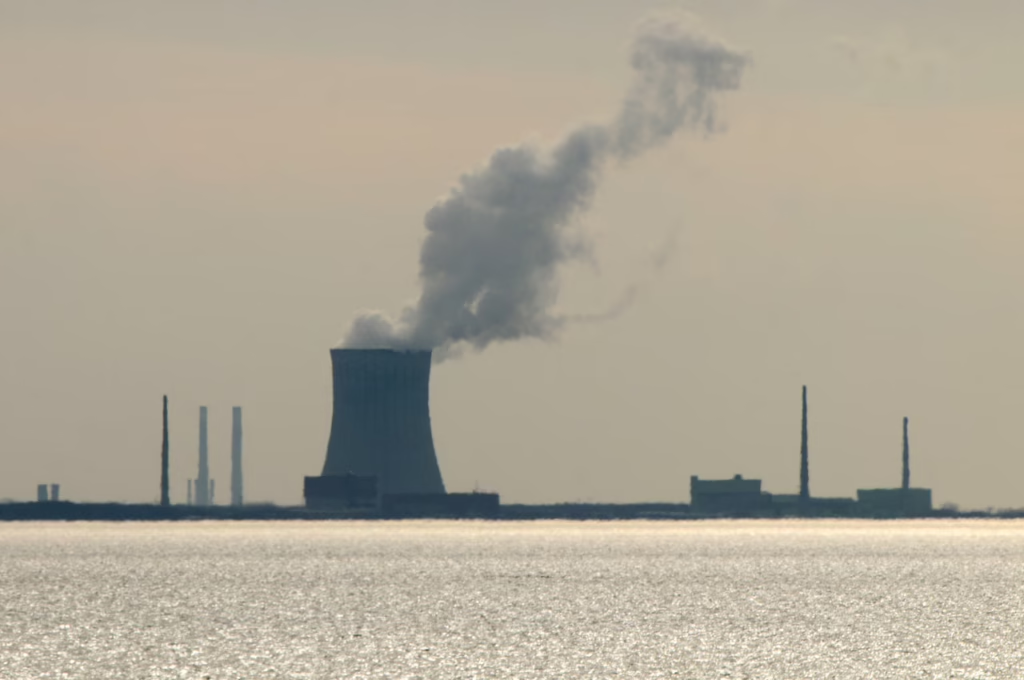
Syracuse, N.Y. – The owner of Nine Mile Point Unit 1, the oldest operating nuclear power plant in the United States, applied Thursday to continue running for another 20 years. The Oswego County plant began producing electricity in 1969.
Nine Mile 1, with a capacity of 630 megawatts, is one of four operating nuclear reactors in New York. Together they generate one-fifth of the state’s electricity. The other three reactors are expected to seek license renewals as their current licenses near expiration.
Because of their importance to the electric grid, state officials recently agreed to continue revenue guarantees for the nuclear plants. Depending on wholesale prices, the guarantees could cost utility ratepayers up to $33 billion in subsidy payments over two decades.
Owner Constellation Energy Corp. has said the subsidies, which started in 2017, are necessary to make sure the aging facilities have enough money to keep running.
If the U.S. Nuclear Regulatory Commission approves the license extension for Nine Mile 1, the reactor could continue to operate through 2049, a total of 80 years.
The other Oswego County reactors are Nine Mile Point 2, with 1,300 megawatts, and James A. FitzPatrick, at 855 MW.
A fourth Upstate reactor, the R.E. Ginna nuclear plant in Wayne County, is scheduled to apply for a license extension by the end of June. Ginna, with a capacity of 580 MW, is the nation’s second-oldest commercial nuclear plant.
“Extending the operating life of Constellation’s nuclear units will be critical to help New York State affordably meet its energy reliability and climate goals,’’ said Mark Rodgers, a company spokesman, in a prepared statement. “Constellation will continue making investments in Nine Mile Point Unit 1 to ensure that it will operate safely and reliably through mid-century.”
Despite their age, Nine Mile 1 and Ginna are not the first U.S. plants to seek license extensions beyond 60 years. The NRC has already approved 10 nuclear plants, comprising a total of 18 reactors, to operate up to 80 years. Several more applications are under review.
In the past, the NRC has taken at least 18 months, and sometimes two years or more, to act on license renewal applications. In a May 2025 executive order, President Donald Trump directed the NRC to complete license renewals within 12 months.
“We expect to be able to complete our review within 12 months,’’ affirmed Maureen Conley, a public affairs officer at the NRC.
NRC officials are reviewing Constellation’s application and plan to make it public on the commission’s website April 2, Conley said. The review will focus on safety and environmental impacts. Public comments are expected to be part of the process, Conley said.
“We do expect there will be an opportunity to request a hearing on safety aspects (of) the application,’’ Conley said. “We should know more about public input on the environmental review portion after we complete our acceptance review.”
Nuclear critics say they are worried about the shortened timeline ordered by Trump.
“It’s a major concern,’’ said physicist Edwin Lyman, director of nuclear power safety at the Union of Concerned Scientists. “We don’t think it’s appropriate for a politician or political appointee to dictate how fast the NRC should complete a review.”
New York’s state energy plan counts on the existing nuclear fleet, with a combined capacity of 3,400 MW, to continue operating for years to come. And Gov. Kathy Hochul is pushing for a vast expansion. She wants to add 5,000 megawatts of new nuclear capacity.
Public officials in Oswego County, home to three of the Upstate reactors, are lobbying to host at least one more. The nuclear plants are popular because they provide more than 1,400 high-paying jobs and pay roughly $44 million in annual property taxes.
In an announcement earlier this year, officials at the state Public Service Commission said the extended nuclear subsidy program was vital to maintaining a reliable electric grid.
“Without New York’s four nuclear reactors … the state would face unacceptable system reliability risks as a result of insufficient power,’’ the commission said.
Source: Syracuse